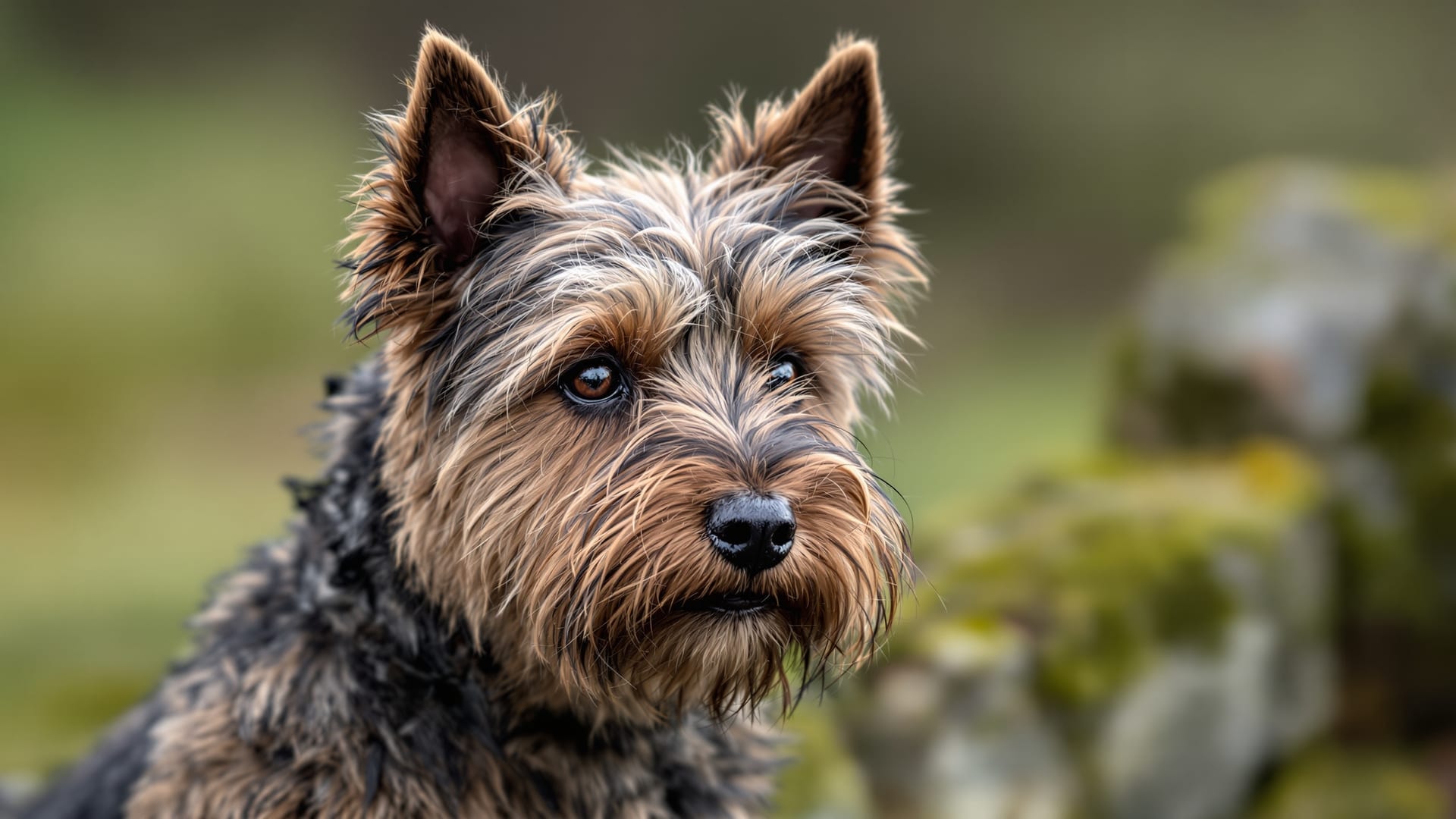
The Cairn Terrier
Small, shaggy, weatherproof and entirely convinced of itself. The Cairn Terrier is one of the oldest working terrier types in Britain and has changed less than most breeds in the century since it was formally recognised.
The shape of the dog
A Cairn is a short-legged terrier built to be functional rather than pretty. Adults typically stand around nine to ten inches at the shoulder and weigh in the region of thirteen to sixteen pounds, with a body slightly longer than it is tall. The head is broad for the size of the dog and carries a distinct foreface, small pricked ears and dark, deep-set eyes that give the breed its characteristic expression — inquisitive, faintly amused, and permanently ready.
The overall impression is meant to be of a dog that could still do the job: strong quarters, good bone for its size, a straight front, and free movement. Nothing about a correct Cairn is exaggerated. The American Kennel Club breed page and the Kennel Club breed standard for the Cairn Terrier both set out the official descriptions; our page on what the breed standard describes explains the reasoning behind them in plain language.
The double coat
The coat is the single most misunderstood feature of the breed. A Cairn carries two coats at once: a soft, dense undercoat for insulation and a harsh, almost wiry outer coat that sheds water and dirt. Together they are what allowed a small dog to work wet rock and cold ground all day.
Two practical consequences follow. First, a correctly maintained Cairn sheds relatively little compared with a smooth-coated dog of similar size — the dead hair tends to stay in the coat until it is brushed or stripped out. This is often summarised as the breed being "good for allergy sufferers", which overstates the case considerably; no dog is hypoallergenic, and anyone with a serious allergy should spend real time around adult dogs before committing. Second, a Cairn's coat is maintained by hand, not by clippers. Clipping removes the harsh outer coat and leaves the soft undercoat behind, and the texture that results is softer, fluffier, and far more prone to matting and holding dirt. Our grooming page covers hand-stripping and the weekly routine in detail.
Colour: almost everything except white
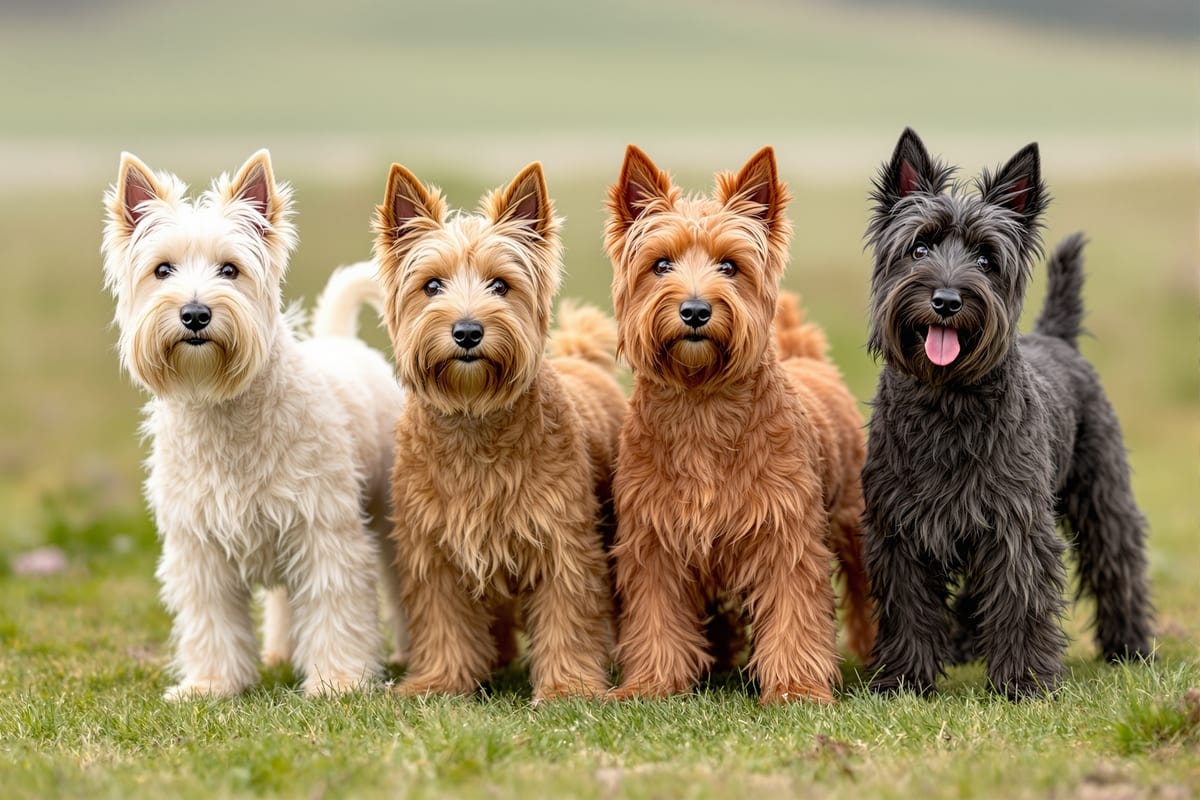
Cairns come in cream, wheaten, red, sandy, grey and near-black, and brindling is acceptable in all of those. Solid black and solid white are not part of the breed's picture, and neither are black-and-tan patches. Dark points — a darker mask, ears and tail tip — are typical and often quite striking.
The most useful thing to know about Cairn colour is that it is not fixed. Many Cairns change colour over the course of their lives, and the direction is not reliably predictable: brindles often darken steadily for years, sometimes to something close to black, while wheatens and reds may lighten, darken or stay put. A breeder who tells you exactly what colour a nine-week-old puppy will be at four years old is guessing. Choose the puppy, not the colour.
Character in one paragraph
Bold, busy, funny, stubborn, affectionate on its own terms, and endlessly interested in whatever is under the shed. A Cairn is assertive without being an aggressive breed, and a well-raised one is sociable with people and generally tolerant of other dogs. What it is not is biddable in the way a herding or gundog breed is biddable. A Cairn asks why. Our temperament page goes further into what that means day to day, and the training page covers what to do about it.
Living requirements
- Exercise: two real walks a day plus off-lead running in a secure space. A Cairn that is under-exercised becomes a Cairn that redecorates.
- Containment: solid fencing, checked at ground level. Cairns dig, and they were bred to keep going when it hurts, which is exactly why underground electronic fencing is unreliable with this breed.
- Weight: Cairns gain weight easily and are extremely persuasive beggars. Measured meals and honest body-condition scoring matter; the ASPCA's general dog care guidance is a sound baseline.
- Company: they are people-oriented and do poorly as garden ornaments.
Plan the shared space
A small dog still occupies the whole household. Think in terms of routes and routines: the doorway used for walks, the resting spot beside ordinary activity, the gate between shared space and a room holding small pets. A Cairn's reach includes whatever can be dragged, climbed onto or investigated underneath. Look at the room from floor level before assuming a low shelf or an open basket will be ignored.
Outdoor space deserves the same attention. A yard is useful when its boundaries are sound and someone spends time there with the dog; square footage alone is a poor description of what it offers. Keep a permitted digging area distinct from planted beds, put loose garden materials away and check around gates after work in the yard. Inside, rotate familiar toys or searching tasks instead of presenting everything at once. The question is how the space will be used on an ordinary day, not how much of it you own.
Lifespan and health in outline
Cairns are a long-lived breed; fourteen to fifteen years is routine and sixteen is not remarkable. They are also comparatively robust, drawn from a relatively broad gene pool and never selected into the structural extremes that trouble some other small breeds. That is not the same as being free of inherited disease, and a handful of conditions are well documented in the breed. The health page sets out what is worth screening for and what the parent-club recommendations cover.
Where a Cairn comes from
Puppies from carefully planned litters, and adults through breed rescue, are the two routes that keep leading back to people who know the breed. Both are covered here: finding a responsible breeder and Cairn Terrier rescue and rehoming. If your interest is historical rather than practical, start with the breed's origins in the Highlands.