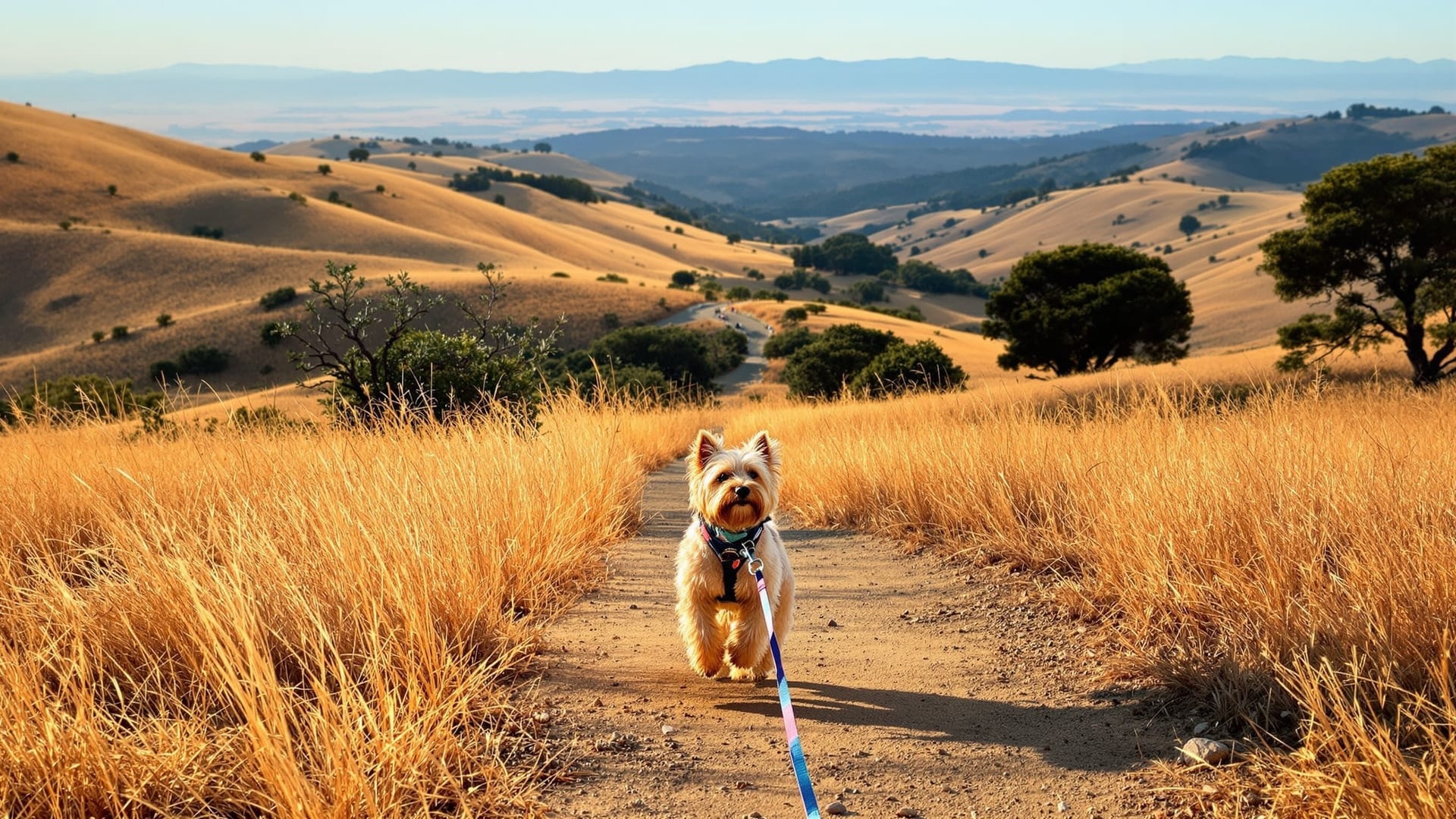
The Cairn Terrier in Northern California
A dog built for a wet Scottish hillside lives, in large numbers, in one of the driest and most seasonally flammable landscapes in North America. It works better than you would expect, but the hazards are genuinely different and worth knowing before your first summer.
Foxtails: the local emergency
If you take one thing from this page, take this. Foxtails are the barbed seed heads of several wild grasses that carpet Northern California's hills and roadsides, drying out and turning golden from late spring. The awn is shaped like an arrowhead with backward barbs: it moves in one direction only, and it does not dissolve. A foxtail can enter a paw, an ear, a nostril, an eye or under the skin and then travel inward, causing abscesses and serious infection.
A shaggy, low-slung, nose-down terrier is close to a worst-case design for collecting them. Practical routine from May until the first real rains:
- Check after every walk in dry grass — between every toe, in the armpits and groin, inside the ear flaps, around the muzzle and eyes, and under the beard.
- Keep the feet tidy, trimming the hair between the pads in summer so seeds cannot lodge unseen.
- Stay on cleared trail and off the golden verge in the dry months.
- Treat the warning signs as urgent: sudden violent sneezing, head-shaking, an eye held shut, obsessive licking of one foot, or a swelling between the toes. Early removal is minor; a migrated foxtail is not.

Heat
Inland Northern California — the Central Valley, the interior valleys, the foothills — runs far hotter than the coast, and a double-coated dog is not a heat specialist. Walk early and late, carry water, and use the back of your hand on the asphalt: too hot for five seconds is too hot for paws. Do not shave a Cairn down for summer. The double coat insulates against heat as well as cold, and removing it exposes skin to sun without improving cooling; shade, water and timing do the actual work. Never leave any dog in a parked car.
Wildlife and the terrier problem
Coyotes are established across the region, from open-space preserves to suburban streets, and a thirteen-pound dog is within their range of interest. Dawn and dusk are the risk hours, a leash is the answer, and a small dog should not be left unattended in an unfenced yard. Rattlesnakes occur through the dry hills in the warm months — a terrier that puts its face into a rock pile is exactly the dog that finds one, which is another argument for staying on trail. Ticks are widespread in the coastal ranges and oak woodland; use year-round preventive and check the dog thoroughly after any walk in brush.
And the routine one: this is a region full of ground squirrels and gophers. Your Cairn will notice. Every one of them.
Terrain, and the good news
The compensations are considerable. The region has an exceptional density of regional parks, open-space preserves and dog-friendly trail, a climate that permits year-round outdoor exercise, and a strong culture of dogs in public life. A Cairn's size makes it an easy travelling companion, and the coastal weather in particular suits a harsh-coated dog very well.
Terrier culture in the region
Northern California has supported organised terrier activity for decades — conformation shows, obedience and rally, barn hunt, and earth-working tests where terriers of the right size and instinct navigate an artificial tunnel to a safely caged quarry. The AKC's Earthdog programme describes how those tests are structured. For a breed whose entire history is underground work, it is the closest thing to the original job that a modern pet dog can legally and safely do, and Cairn owners who try it usually report that the dog needed no instruction whatsoever.
Regional breed clubs are where that activity is organised, and they are also where you find people who have kept Cairns locally for thirty years. This site is not one of them and is not connected to any of them. If you want the regional club for this breed and this area, the Cairn Terrier Club of Northern California is the regional breed club for this area and publishes its own website; our about page explains our position plainly.
Wildfire and smoke
Late summer and autumn bring smoke, and dogs are affected by poor air quality as people are. On heavy smoke days, shorten walks drastically and exercise the dog's nose indoors instead — scentwork and food puzzles, as on the training page. Evacuation planning should include the dog explicitly: a carrier or crate ready to go, a few days of food, medication, vaccination records, and a current photograph of the dog with you. Microchip registration details are worth checking before you need them, not after.