What the Breed Standard Describes
A breed standard is a written description of a functional dog. It is not a beauty contest rulebook, however much it is used as one, and reading it as an engineering specification makes far more sense of it.
We do not reproduce the official standards here — they are the property of the registries that maintain them, and they are revised. The authoritative texts are published by the American Kennel Club and, in Britain, by the Kennel Club, and the breed's national parent club, the Cairn Terrier Club of America, publishes explanatory material for its members. What follows is an outsider's plain-language account of what those documents are getting at.
The first impression
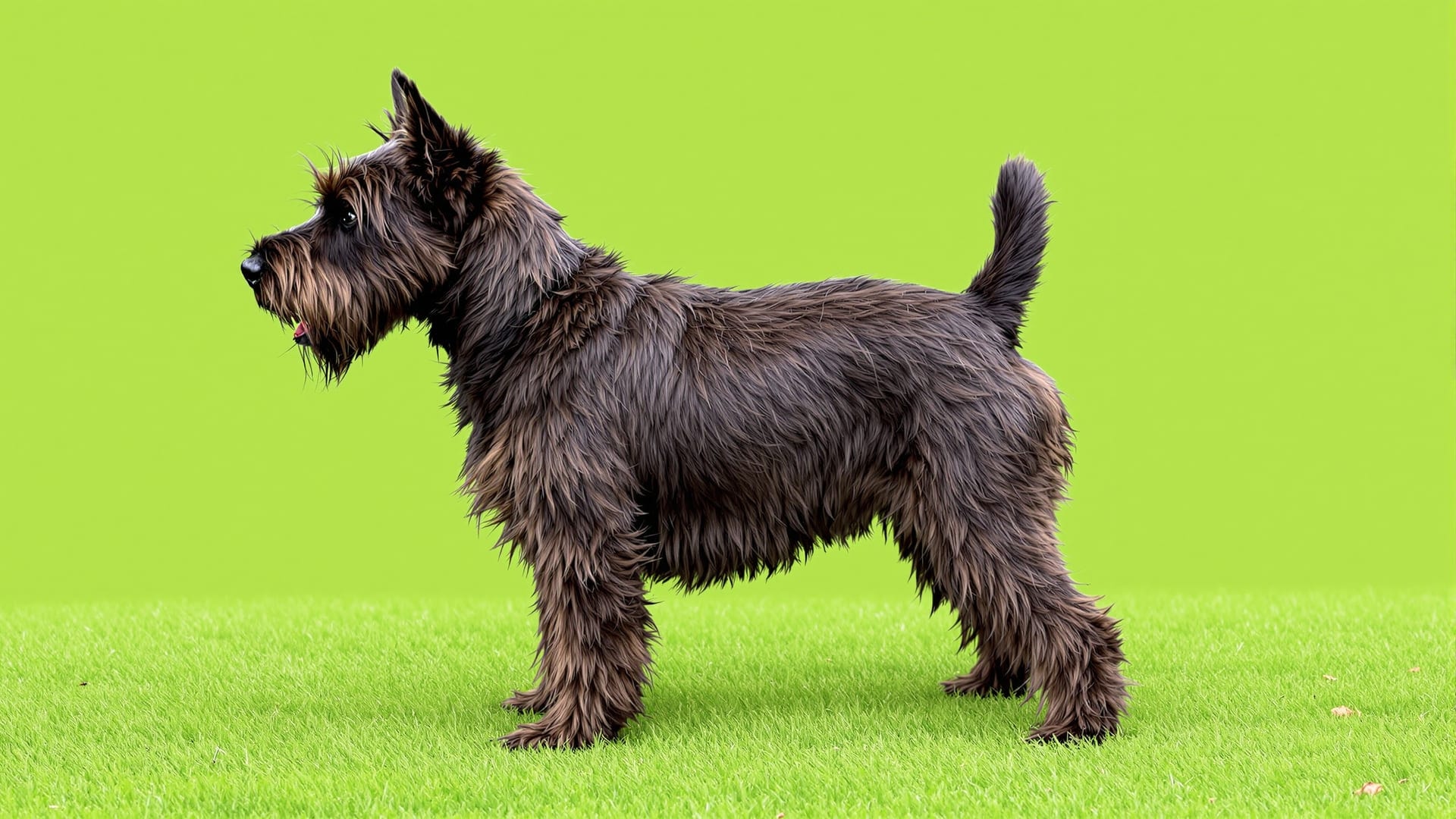
Standards for this breed open with the overall picture rather than a measurement, and the picture is consistent: a small, shaggy, alert dog carrying its head, ears and tail up, eyes bright, poised and ready for something to happen. That "ready for anything" quality is doing real work in the text. A Cairn that stands about looking soft and decorative is not showing breed type, whatever its measurements say.
Proportion and size
The dog is slightly longer than tall, standing around nine to ten inches at the shoulder, weighing roughly thirteen to sixteen pounds, with bone and substance that look adequate for hard work. The reasoning is straightforward. Too tall or too heavy and the dog does not fit into the space it was meant to work; too fine and it cannot survive what it finds there. Every proportion in the standard is downstream of a dog that had to get into a stone cairn, do a job, and come back out.
Head and expression
The head is broad in proportion to the body, with a definite stop, a strong but not snipey muzzle, and small pricked ears set well apart. The eyes are set wide, deep and dark, with shaggy eyebrows above them. Together these produce what the standard calls "expression" — the specific foxy, amused, attentive look that is the breed's signature. Expression is one of the hardest things to describe and one of the first things a knowledgeable person checks.
Coat and colour
The coat is described as a harsh, weather-resistant outer coat over a short, soft, close undercoat. A soft, silky or open coat is a fault, because it is a coat that would not have kept the dog dry. The shaggy, slightly untidy outline is correct and deliberate; a Cairn presented sculpted and smooth has been over-groomed, not well-groomed. See the grooming page for how the coat is maintained in practice.
On colour, the standards permit a broad range — cream, wheaten, red, sandy, grey and near-black, with brindling acceptable throughout — and exclude white, and black-and-tan. Nose, ears and tail tip are often darker. The persistence of colour change through the dog's life is noted in the breed literature and is one reason experienced people rarely make promises about it.
Movement
Free, purposeful, well-coordinated movement with good reach in front and drive behind, on a dog that stays level and does not roll or paddle. Movement is where structure declares itself: a dog can look correct standing still and reveal on the move that its angles do not match.
Why a pet owner should care
Two reasons, both practical. First, structure is welfare — a soundly built dog is likelier to reach fourteen or fifteen without joint trouble, and a correct harsh coat is genuinely easier to live with than an incorrect soft one. Second, a breeder who can discuss the standard fluently, including where their own dogs fall short of it, is a breeder who is breeding to something. That is a useful signal when you are choosing where a puppy comes from — see finding a responsible breeder.
And a caution in the other direction: a standard describes appearance and soundness. It says almost nothing about whether a particular dog's parents were screened for inherited disease, which is a separate question entirely and is covered on the health page.